
This newsletter is a free publication by the Institute for Secure Activism (ISA), a 501(c)(3) nonprofit organization dedicated to promoting personal security for civil rights, human rights, and social justice activists. We believe that technology should work for activists, and that we can actively limit governments from using technology to suppress activism. We focus on individuals who advocate for LGBTQ+, Black, Indigenous, immigrant and other marginalized communities. We provide hands-on training, instructional guides, and direct consultations to help people in civil society organizations protect themselves and their connections. Please consider making a tax-exempt donation to support our mission.
Subscribe to an email version of this newsletter
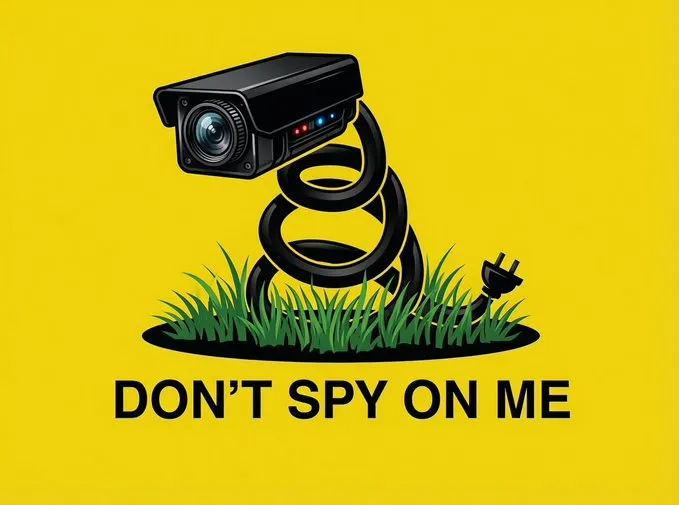
Flock cameras and data centers have been in the news a lot recently. There is a common thread which connects Flock’s cameras, the algorithms that manipulate our social media feeds, and the data centers now rising around US towns. It isn’t any single company or technology, but a business model: one in which the collection and analysis of human behavior is itself the product. The same Big Tech Surveillance system that logs a license plate outside a grocery store is, in the same data center, training the social media algorithms that decide what we should see, buy, and believe. This issue may be one of the few remaining topics which unite people who agree on almost nothing else. Suburban homeowners associations, small-town city councils, and members of Congress from opposite ends of the political spectrum are now asking the same basic question: who gets to watch us, and who profits from it? This suggests that Big Tech Surveillance’s greatest vulnerability may not be a lawsuit or a regulation, but the plain visibility of its own infrastructure. The first step is to talk about it, and raise the alarm.
So let’s talk about Flock. The cameras deployed nationwide by the private corporation Flock Safety have sparked ire across the political spectrum in many states and towns. Flock Safety’s automated license plate reader (ALPR) cameras sell to law enforcement agencies, municipalities, commercial businesses, homeowners associations, and other groups to install and maintain Flock systems. Their cameras photograph vehicles on the road and allegedly they don’t capture live video. However, Flock continues to add features and offer new products capable of recognizing individuals, and even performing facial recognition. Flock cameras transmit their photos to a central corporate database. While Flock Safety claims that individual clients’ photo streams in that central database aren’t shared with other clients without permission, Immigration and Custom Enforcement (ICE) has reportedly used Flock data to harass and detain immigrants despite not officially having access to the data or even having a contract with Flock.

Police officers across the United States continue to abuse the Flock database for unlawful purposes. Flock claims that their auditing tools prevent such abuses from going unnoticed, yet that hasn’t been sufficient to deter ongoing misuse. The auditing system relies on individual agencies to monitor access to their own data, while Flock Safety dodges responsibility. In fact, Flock employees themselves repeatedly used live views from a Flock camera inside a children’s gymnastics center in Georgia as part of sales demos to potential clients. Flock’s CEO recently stated that US citizens need to compromise on their personal privacy in order to allow technologies like Flock to solve and prevent crime. That same CEO, however, has used Google’s privacy process to blur out the Google Street View image of his personal home.
Widespread video surveillance is not new. A flood of news articles in 2020 and 2021 cataloged cameras in cities across the world. The cities with the most cameras was Beijing China with 1.15 million cameras, followed by Shanghai China with 1 million and London England with 628,000. The city with the highest density of cameras was Chennai India with 657 cameras per square kilometer. London comes in fourth on the camera density list with 399 cameras per square kilometer. The highest ratio of cameras to city residents is in Taiyuan China with 120 cameras per resident, followed by Wuxi China with 92, and then London England with 67.

There is an important difference between these situations and Flock’s camera network across the United States: Flock cameras are neither owned nor operated by a central government. Instead, access to their collected data is controlled by a corporation whose central interest, by definition, is bringing value to their shareholders. This is a central tenet in the ongoing discourse around what Shoshana Zuboff termed Surveillance Capitalism: rather than the state itself as the main enemy, it’s big corporations who are now the bad actors. They’re very willing to collaborate with the state and share your data with governments and other private sector actors if it makes them money or curries favor.
The rise of Flock cameras isn’t the only alarming trend. Rising public concerns with Big Tech Surveillance like Flock are overlapping with other issues. There is a growing discomfort with Artificial Intelligence. This concern is weaving into an existing awareness that companies like Meta and Tiktok heavily monetize and manipulate our social media interactions. Many are beginning to recognize that the physical locations where Big Tech collects and analyzes surveillance data are the same places where social media exploitation and AI processing occur: data centers.

Data centers are being constructed across the US at an unprecedented rate. Their construction and operation poisons the air, fouls the water, and drowns previously neighborhoods with incessant noise. They require massive amounts of power which requires additional transmission line construction and often the use of natural-gas-powered jet turbine electrical generators. Communities otherwise divided over many other issues have united against these incursions and insults.
What We Can Do: Reduce Big Tech Surveillance on your Phone
At ISA, we are firm believers that personal behavior changes are no substitute for fighting for local and national leaders who don’t sell our democracy to Big Tech. For personal protection we can all certainly use tools like DeFlock.org’s map to avoid driving past ALPRs. We can also work with organizations like our partner DeFlockFairfax.com to organize legal objections to these surveillance networks. However, we should also remember thatBut all of us voluntarily carry another very effective tool of Big Tech Surveillance with us every day: our phones. So while we fight for change against Flock and other systemic surveillance, we can do a few quick things to reduce some of the information our phones share with Big Tech.

The first and easiest step is to disable the Advertising Tracking built into your phone itself.
- On Android: First, go to “Settings > Privacy > Ads” (or “Settings > Google > Ads” on older Android versions) and select “Delete Advertising ID”. Then, still in “Settings > Privacy > Ads”, click “Opt out of Ads Personalization”. Finally, go to “Settings > Security & Privacy > Location Services > System Services” and turn off “Location-based ads”.
- On iPhone: First, go to “Settings > Privacy & Security > Tracking” and turn off “Allow Apps to Request to Track”. Then, go to “Settings > Privacy & Security > Apple Advertising” and turn off “Personalized Ads”.
The next thing you can do is prevent apps from asking your phone for it’s location. Most apps don’t need that information!
- On Android: open Settings, choose Location, then choose “App location permissions.” Click on each app which doesn’t need to know your location, and choose “Don’t Allow”.
- On iPhone: open Settings, choose Privacy, then Location Services. Click on each app which doesn’t need to know where you are, then choose Never under “Allow Location Access”.
Finally, you can build an intentional habit about how you use your phone: if your phone itself doesn’t need to know exactly where you are at every moment of every day, tell it to stop asking! Get into the habit of turning off Location Services normally. Turn it back on when you need to navigate, or some other app needs to know where you are. Then turn if off again!
- On Android: Swipe down from the top of the screen and click the “location pin” icon: this toggles Location Services on and off. Or, go to “Settings > Location” and turn “Use location” off and on.
- On iPhone: Go to “Settings > Privacy & Security > Location Services”. Turn the switch at the top of the screen off or on to disable or enable Location Services.
We are not powerless. There are steps we can take to make ourselves and our loved ones safer while we fight for a world where surveillance capitalism and other anti-democracy forces are no longer calling the shots. Help us spread the word by supporting us to give people the safety tools to stay in this fight. We are a small start-up, and we need to pay our salaries so we can keep doing this work. Every little bit helps!
We take care of us, we keep our community safe, we look out for each other. Go do good work!
Brian C. Stearns
Executive Director, The Institute for Secure Activism